How much safety stock should a restaurant carry above its par levels?
Par already includes a buffer, so extra safety stock is a deliberate choice, not a default. Here is how to decide how much, on which items, and when to hold none at all.
Par versus safety stock, and why the distinction matters
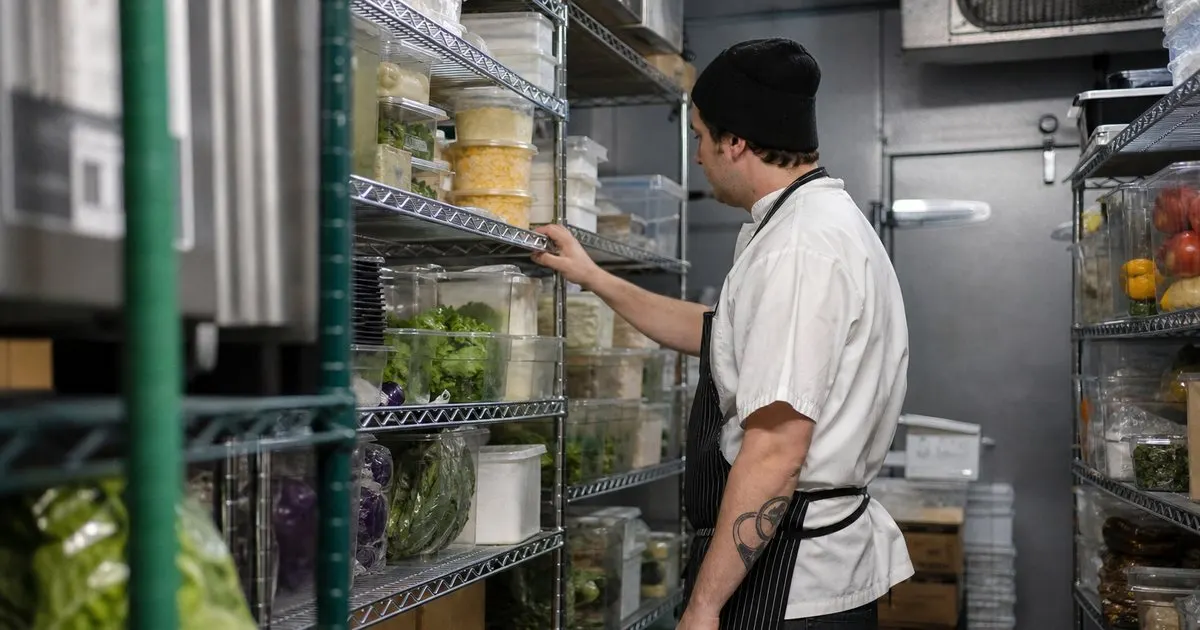
A par level, done right, already covers expected usage between deliveries plus a modest cushion for a normal busy period. Safety stock is the amount held above that, specifically to survive an abnormal event: a vendor short, a late truck, a surprise buyout, a holiday weekend that runs hotter than forecast. Kitchens that blur the two end up with pars that are secretly padded on everything, which ties up cash, crowds the walk-in, and makes usage data harder to read because the cushion hides the real trend.
Treating safety stock as a separate, explicit number per item forces a better question: what would actually go wrong if this item ran out, and how likely is that? For a garnish with three alternatives, the answer is nothing much, so safety stock is zero. For the single protein that anchors half the menu and comes from one vendor, the answer is a bad night and lost sales, so a real buffer is worth its cost. Most items land somewhere in between, and most kitchens have far fewer true must-not-stockout items than they think. Related: How do reorder alerts prevent stockouts before they hit the line?
Keep reading: How do you set par levels for restaurant inventory that actually hold up?, What is the fastest way to run accurate weekly inventory counts in a kitchen?, How do reorder alerts prevent stockouts before they hit the line?. See how ParLevelr helps you restaurant inventory par levels and reorder alerts.
Sizing the buffer from lead time and variability
The two inputs that matter are how long it takes to get more (lead time) and how much usage swings (variability). An item delivered daily with steady usage needs almost no safety stock, because a short is fixed tomorrow. An item delivered once a week with usage that doubles on weekends needs more, because a miss lands in the middle of the busiest stretch with no easy recovery. A practical starting point is to hold safety stock equal to one extra delivery interval of usage for critical items with long lead times, and roughly one busy day of usage for critical items with short lead times. Related: How do you set par levels for restaurant inventory that actually hold up?
Refine from there using your own history. Look back over a few months of counts and note how often each critical item came close to zero or actually ran out, and what caused it. If the cause was a late truck, the buffer needs to cover the typical delay, often one to two days. If the cause was a demand spike, size the buffer to the spike, not the average. If an item has never come close to running out, its buffer is probably too large already and can be trimmed. Related: How does tracking usage help you right-size par levels over time?
The short list of items that deserve a buffer
Rather than adding a buffer to everything, build a short list. Good candidates share a few traits: they are used in several high-selling dishes, they have a single vendor or a long lead time, they are hard to substitute without changing the plate, and running out of them costs sales rather than just annoyance. In most kitchens this is a handful of proteins, a couple of dairy items, one or two dry goods that everything depends on, and perhaps a signature ingredient that defines the concept. Related: What is the best way to organize vendor order sheets across several suppliers?
Everything else gets par and nothing more. This is the part that takes discipline, because it is easy to argue that any item might run out. The test is whether a stockout of that item changes what you can sell. If a cook can swap in a different herb or a similar cheese and the guest would not notice, that item does not need a buffer. Keeping the list short means the extra cash and space go to the items where a stockout genuinely hurts, and the rest of the inventory stays lean.
Managing safety stock so it does not rot on the shelf
Safety stock is only useful if it is fresh and findable. Rotate it into normal use on a first-in, first-out basis rather than keeping a separate untouched pile that ages. The simplest way is to hold the buffer as part of the same shelf position, with the par plus buffer as the reorder target and the oldest units always in front. For frozen or shelf-stable items this is easy. For fresh proteins and dairy, the buffer should be small enough to turn over within the shelf life, or it becomes waste dressed up as prudence.
Review the buffer list quarterly and after any near-miss. If a critical item stocked out despite a buffer, the buffer was undersized or the cause was something the buffer could not fix, such as a vendor discontinuing the product. If a buffer sat untouched for months, it may be larger than needed. Software that tracks on-hand against par can show how often each item dips into its buffer, which is the cleanest signal for whether the number is right.
- Par covers normal usage plus a small cushion; safety stock is a separate, deliberate buffer for abnormal events.
- Size buffers from lead time and usage variability, typically one busy day to one extra delivery interval.
- Only a short list of hard-to-substitute, sales-critical items deserves a buffer at all.
- Rotate buffer stock into normal use and review the list quarterly so it never spoils.

Julien Jimenez
Julien Jimenez is an independent software builder based in Paris. He designs, ships, and operates focused SaaS products for small businesses and independent professionals. Read the full author page.
Never Run Out And Never Over Order
Restaurant inventory par levels and reorder alerts. ParLevelr is built to help you put this into practice.
Start free trialMore from the ParLevelr blog
How do you set par levels for restaurant inventory that actually hold up?
What is the fastest way to run accurate weekly inventory counts in a kitchen?
How do reorder alerts prevent stockouts before they hit the line?
Get the ParLevelr playbook
Practical guides on inventory and ordering, straight to your inbox as we publish them. No spam, unsubscribe any time.