How should a chef train new kitchen staff to count inventory properly?
A count is only as good as the least trained person doing it. Here is a short, repeatable way to teach counting so the numbers stay consistent when the chef is off.

What goes wrong when counting is taught by watching
Most cooks learn to count inventory by being handed a clipboard and told to follow someone once. That produces a count that looks complete but is not consistent. One person counts the open case as one, another as a half, a third skips it. One person counts what is in the reach-ins on the line, another only counts the walk-in. Each variation is small and each one makes the usage number for that item unreliable. When the chef takes a week off and someone else counts, the report shows a wild swing that is really just a different set of habits. Related: What is the fastest way to run accurate weekly inventory counts in a kitchen?
The cost shows up in ordering. A count that is high by a few units on a dozen items means the reorder suggestions are low on all of them, and the kitchen runs short mid-week. A count that is low leads to over-ordering and a crowded walk-in. Neither looks like a training problem from the outside, which is why it rarely gets fixed as one.
Keep reading: How do you set par levels for restaurant inventory that actually hold up?, What is the fastest way to run accurate weekly inventory counts in a kitchen?, How do reorder alerts prevent stockouts before they hit the line?. See how ParLevelr helps you restaurant inventory par levels and reorder alerts.
The four rules every counter needs to know
Keep the training to a handful of rules that fit on a card. First, count every location where the item lives, including line reach-ins, prep stations, and the bar if it shares product. Second, count in the unit written on the count sheet, no exceptions, and record partials as a decimal. Third, count what is physically there, not what should be there, and never adjust a number to match last week. Fourth, if something looks wrong, such as a case that is lighter than it should be or a product with no label, write a note rather than guessing.
Each rule addresses a specific failure. The first rule fixes the missed-location problem, which is the single most common source of count variance. The second fixes unit confusion. The third addresses the quiet habit of copying last week's number for items that are annoying to count. The fourth turns anomalies into information instead of noise. Teaching the reason behind each rule takes a few extra minutes and makes people far more likely to follow it when nobody is watching.
A three-count training path that actually sticks
The first count is shadowing: the trainee walks with an experienced counter and watches, with the trainer explaining decisions out loud, especially how partials and odd items are handled. The second count is a paired count: the trainee counts a section alone, then the trainer counts the same section, and they compare line by line. Differences are the whole point of this step, since each one exposes a rule that has not landed. The third count is the trainee counting a full area alone, with the trainer spot checking a handful of high-value items afterward. Related: How do reorder alerts prevent stockouts before they hit the line?
Space the three counts over two or three weeks rather than doing them in one, because the point is to build a habit, not to pass a test. After the third count, the trainee is a counter, but spot checks should continue for a month on the items that matter most, typically proteins, dairy, and anything with a high unit cost. If a spot check finds a difference, walk back through the rule that was missed rather than just correcting the number. Related: Why does the cash tied up in inventory matter as much as food cost?
Keeping counts consistent after training
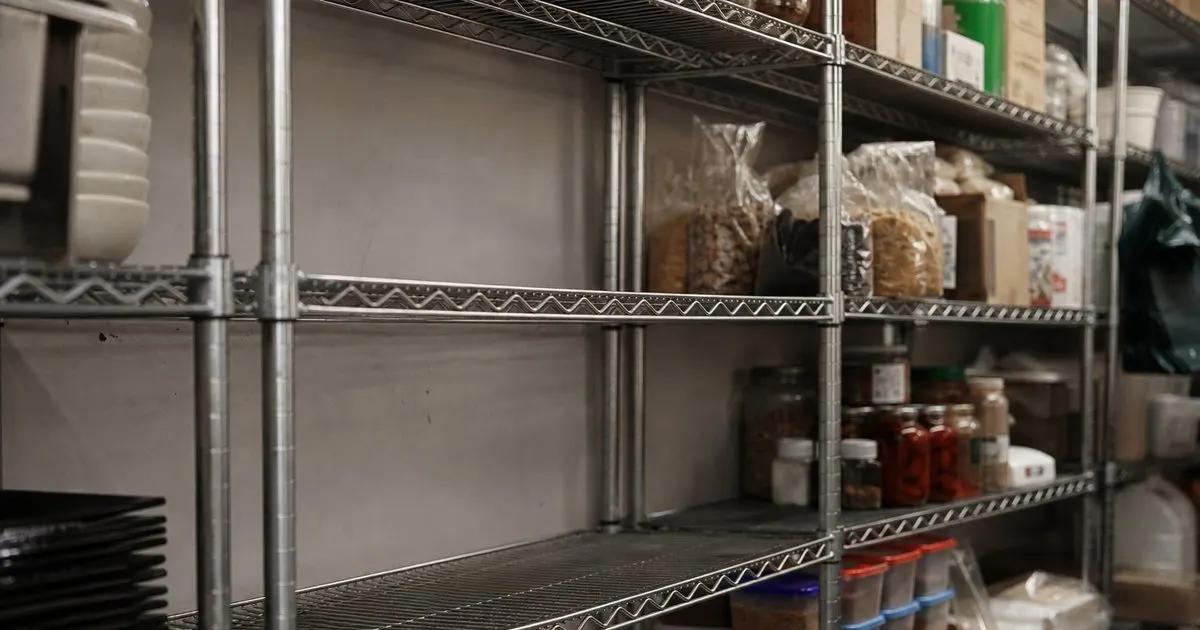
Consistency is easier when the physical setup helps. Label every shelf with the item name and counting unit, keep the count sheet in shelf order so counters walk a fixed path, and keep the storage areas tidy enough that nothing is hiding behind something else. A cluttered walk-in makes even a well-trained counter guess. If your count sheet or app lets you order items by storage location, do it, because it removes the searching that leads to skipped lines.
Rotate counters deliberately rather than by accident. If two or three people are trained and take turns, differences between them show up in the data and can be corrected early. Once a month, compare a count done by each person against the other's on a few items and talk through any pattern. This is a ten minute conversation and it keeps the count from drifting as staff turn over. Well-trained counting is what makes every downstream number, from usage to reorder suggestions, worth reading. Related: How does tracking usage help you right-size par levels over time?
- Counting variance between people is a training problem that looks like an inventory problem.
- Teach four rules: count every location, use the sheet's unit, count what is there, and note anomalies.
- Train with three spaced counts: shadow, paired comparison, then solo with spot checks.
- Labeled shelves and a fixed walking order keep counts consistent after training ends.

Julien Jimenez
Julien Jimenez is an independent software builder based in Paris. He designs, ships, and operates focused SaaS products for small businesses and independent professionals. Read the full author page.
Never Run Out And Never Over Order
Restaurant inventory par levels and reorder alerts. ParLevelr is built to help you put this into practice.
Start free trialMore from the ParLevelr blog

How do you set par levels for restaurant inventory that actually hold up?

What is the fastest way to run accurate weekly inventory counts in a kitchen?
How do reorder alerts prevent stockouts before they hit the line?
Get the ParLevelr playbook
Practical guides on inventory and ordering, straight to your inbox as we publish them. No spam, unsubscribe any time.