What should a restaurant do when a vendor shorts an order or changes lead times?
Shorts and schedule changes are normal. What matters is having a routine for the same day, a backup for the week, and a par adjustment for the long run.
The same-day response to a short
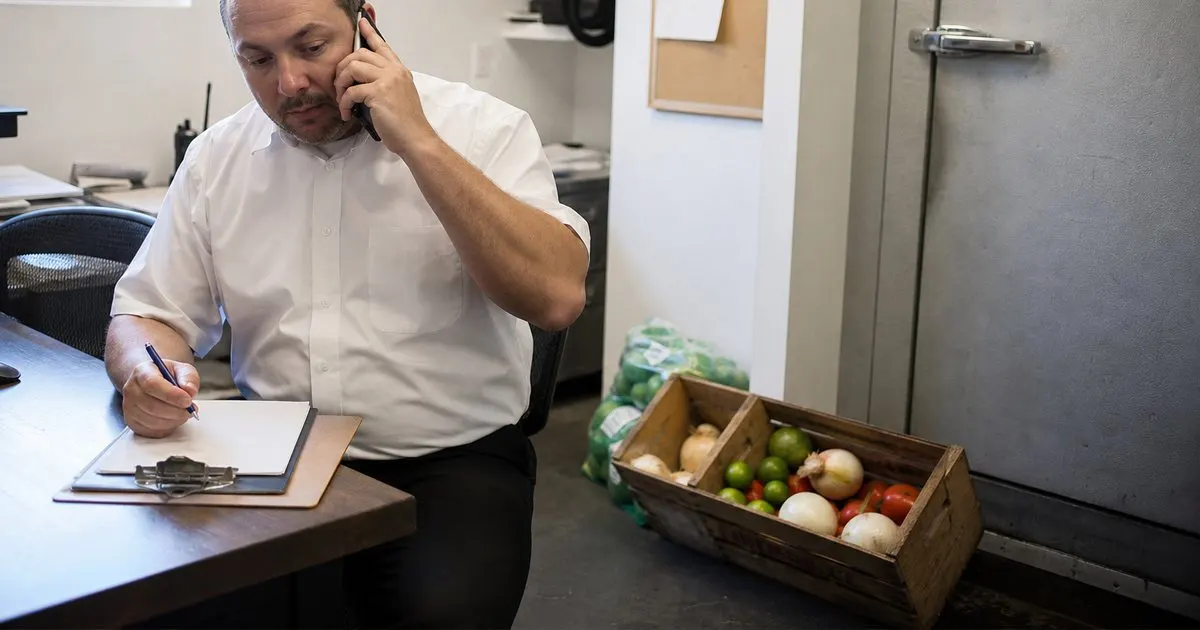
A short is discovered at the back door or, if receiving was sloppy, at the moment a cook reaches for something that is not there. Either way, the first move is the same: figure out how many days of the item you have on hand at current usage, and whether that gets you to the next regular delivery. If it does, note the short for a credit and move on. If it does not, you need a fill-in order today, from the same vendor if they can turn it around or from a backup if they cannot. Related: What is the best way to organize vendor order sheets across several suppliers?
The second move is to protect the line. Tell the chef or lead which items are short and roughly when they will be back, so specials and portioning can adapt before a guest orders something you cannot make. A short you know about at ten in the morning is an inconvenience. A short discovered at seven at night is a lost sale and a bad review. The whole value of good receiving is turning the second case into the first. Related: How do reorder alerts prevent stockouts before they hit the line?
Keep reading: How do you set par levels for restaurant inventory that actually hold up?, What is the fastest way to run accurate weekly inventory counts in a kitchen?, How do reorder alerts prevent stockouts before they hit the line?. See how ParLevelr helps you restaurant inventory par levels and reorder alerts.
Building a backup vendor list before you need it
For every critical item, know at least one alternative source, and ideally have an account open with them already. That might be a second broadline distributor, a local specialty supplier, a restaurant supply store, or in a pinch a warehouse club. Opening an account during an emergency is slow and the pricing is usually worse. Keep the backup list short and current: item, backup vendor, contact, typical lead time, and any pack size difference that matters for your counting unit. Related: How does tracking usage help you right-size par levels over time?
Use the backups occasionally even when nothing is wrong. A small order every month or two keeps the account active, keeps the pricing visible, and lets you see how the product compares. It also gives the backup vendor a reason to help you quickly when the primary vendor fails, because you are a customer rather than a stranger calling at eight in the morning.
When lead times change: adjusting pars and order days
Vendors change delivery schedules more often than kitchens expect. A route consolidation turns a Tuesday and Friday delivery into a Wednesday only delivery, or a cutoff time moves earlier so the order has to be placed a day sooner. The par math changes immediately, because the number of days between deliveries is the biggest input. Going from two deliveries a week to one roughly doubles the days a par has to cover for that vendor's items, and the pars need to move the same week the schedule does.
Recalculate by taking daily usage for each affected item and multiplying by the new number of days between deliveries, plus your normal cushion. Then check whether the walk-in can physically hold the higher pars, because sometimes the answer is that a single weekly delivery does not fit and you need a second vendor for part of the list. Also move your count day so it still lands right before the order cutoff. A count that used to be timed perfectly can be two days stale under a new schedule. Related: What is the fastest way to run accurate weekly inventory counts in a kitchen?
Tracking vendor reliability over time
Keep a simple log of shorts, substitutions, late deliveries, and rejected product by vendor. It does not need to be elaborate: date, vendor, item, what happened, and whether a credit was issued. After a few months, patterns are obvious. One vendor is reliable on everything except a specific category. Another has been slipping for weeks. That log is what you bring to a conversation with the sales rep, and it is what justifies moving an item to a different source.
Reliability also belongs in the safety stock decision. An item from a vendor with frequent shorts deserves a larger buffer or a second source, while an item from a vendor that has never missed can run closer to the bone. If your ordering software tracks receiving discrepancies, it can surface this without extra work. If not, a shared spreadsheet reviewed monthly does the job. The goal is to stop being surprised by the same vendor in the same way.
- On a short, first check days on hand versus next delivery, then decide whether a fill-in order is needed today.
- Open backup vendor accounts before an emergency and place a small order occasionally to keep them active.
- When lead times change, recalculate pars from daily usage times the new delivery interval, and move your count day.
- Log every short, substitution, and late delivery by vendor and review it monthly.

Julien Jimenez
Julien Jimenez is an independent software builder based in Paris. He designs, ships, and operates focused SaaS products for small businesses and independent professionals. Read the full author page.
Never Run Out And Never Over Order
Restaurant inventory par levels and reorder alerts. ParLevelr is built to help you put this into practice.
Start free trialMore from the ParLevelr blog
How do you set par levels for restaurant inventory that actually hold up?
What is the fastest way to run accurate weekly inventory counts in a kitchen?
How do reorder alerts prevent stockouts before they hit the line?
Get the ParLevelr playbook
Practical guides on inventory and ordering, straight to your inbox as we publish them. No spam, unsubscribe any time.